

In the realm of electrical systems, the terminology surrounding switches can often be confusing. Terms like “Main Switch,” “Isolator Switch,” and “Switch Disconnector” are frequently used, but they refer to distinct devices with specific functions. This blog aims to clarify the differences between these commonly used switches, helping you understand their unique roles, applications, and key characteristics.
1. Main Switch
The Main Switch is the primary control device in an electrical system, acting as the main gateway for power supply to a building, facility, or major electrical installation. It is typically located at the point where the utility power enters the premises (e.g., the main distribution board).
Key Functions:
- Primary Isolation: Disconnects the entire electrical system from the main power source for maintenance, repairs, or emergencies.
- Overcurrent Protection: In many cases, modern main Switches incorporate circuit breakers to safeguard against overloads and short circuits, ensuring safety.
Applications:
They are used in residential, commercial, and industrial buildings to control the main power supply. Examples include the main circuit breaker in a home’s distribution panel or the main switchgear in a factory.
For a visual guide on main switch installation, watch this Youtube tutorial.
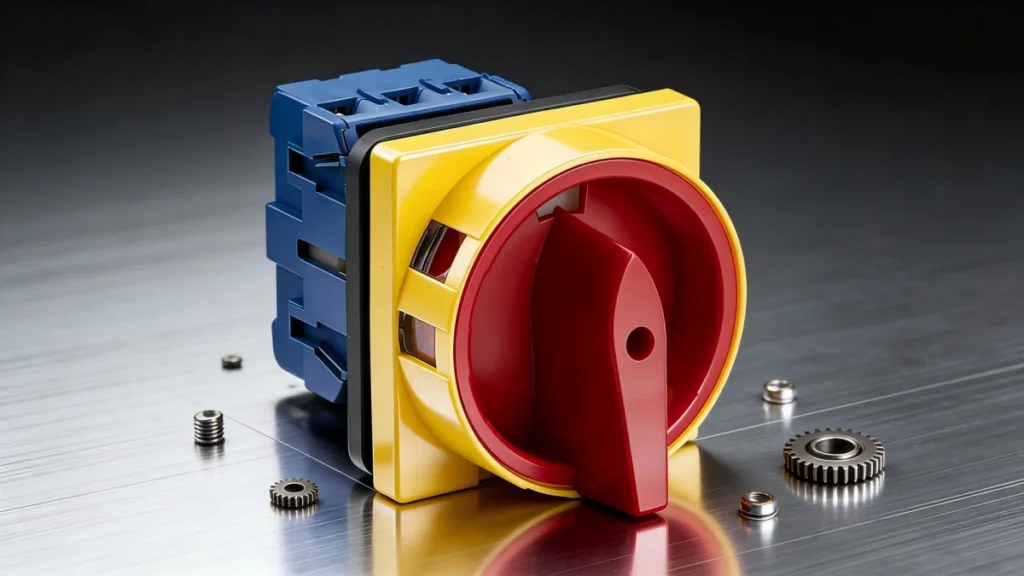
Key Features:
- It has a high current rating that matches the total power demand of the system.
- It often includes a lockable mechanism to prevent accidental reactivation during maintenance.
2. Isolator Switch (Isolating Switch)
An Isolator Switch (or Isolating Switch) is designed to physically separate a part of an electrical system from its power source. Unlike circuit breakers, it does not provide overcurrent protection and should only be operated when the circuit is de-energized (i.e., under no-load conditions).
Key Functions:
- Safe Isolation: Ensures a visible break in the circuit, allowing technicians to work on downstream equipment without the risk of electric shock.
- No Current Interruption: It cannot be safely switched on or off under load (high current flow).
Applications:
Industrial machinery, power transformers, and electrical panels where maintenance access to specific components is required. For example, isolating a motor from the power supply before servicing.
Learn how to safely operate an isolator switch with this Youtube video.
Key Features:
- Visible “open” or “closed” status (e.g., a blade that can be seen when disconnected).
- Manual operation (lever or handle) and often lockable.
3. Switch Disconnector
A Switch Disconnector combines the functions of a switch and an isolator. It can safely switch electrical loads on or off under normal operating conditions and provide isolation when needed. However, like isolators, it is not designed to interrupt fault currents (e.g., short circuits).
Key Functions:
- Normal Load Switching: Turns equipment on/off under standard load conditions.
- Isolation: Provides a visible break for maintenance, similar to an isolator.
Applications:
Low-voltage distribution systems, HVAC equipment, and commercial appliances where both switching and isolation are required. For instance, controlling and isolating a lighting circuit in a commercial building.
Key Features:
- With a higher current rating than standard switches, this device is capable of managing normal operating loads efficiently.
- Combines switching and isolation in one device, reducing installation complexity.
4. Maintenance Switch
A Maintenance Switch is a specialized isolator designed for routine maintenance tasks. It is typically used in low-voltage systems to isolate specific equipment or circuits during servicing, ensuring the safety of personnel.
Key Functions:
- Targeted Isolation: Focuses on isolating smaller, specific components (e.g., a single machine or outlet) rather than the entire system.
Applications:
Residential garages (isolating power tools), commercial kitchens (disconnecting ovens), or industrial settings (isolating conveyor belts).
Key Features:
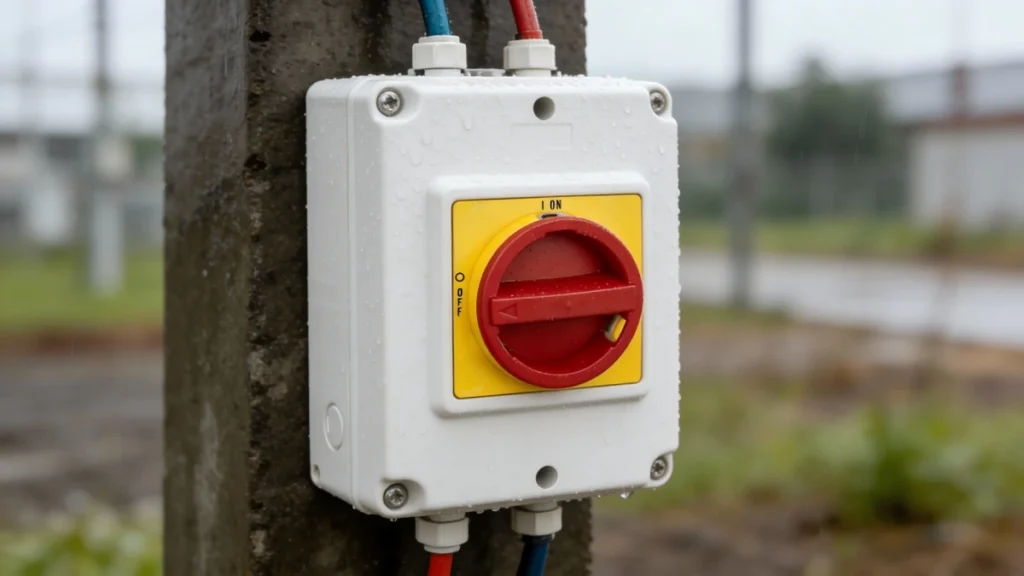
- Compact design for easy installation in tight spaces.
- Often includes a simple toggle or rotary mechanism with clear on/off labeling.
5. Load Isolation Switch
A Load Isolation Switch is a heavy-duty device capable of safely switching and isolating electrical loads under normal operating conditions (unlike standard isolators, which are not designed for load switching). It fills the gap between isolators and circuit breakers but does not provide overcurrent protection.
Key Functions:
- Load Switching: Can turn equipment on or off while current is flowing (e.g., starting/stopping a motor).
- Isolation: Provides a visible break for maintenance after the load is disconnected.
Applications:
Large motors, pumps, and industrial machinery where frequent on/off operation is required, followed by maintenance.
Watch a demonstration of load isolation switch operation here: Youtube Demo.
Key Features:
- Higher current and voltage ratings (suitable for heavy loads).
- Robust construction to withstand arcing during load switching.
6. ON-OFF Switch
An ON-OFF Switch is the most basic type of electrical switch, used to control the flow of current to individual devices or small circuits. It is designed for low-power applications and lacks isolation or protection features.
Key Functions:
- Simple Control: Manually controls the power supply to devices such as lamps, fans, or small appliances.
Applications:
Household appliances, electronic devices, and lighting fixtures. Examples include the toggle switch on a table lamp or the power button on a laptop charger.
Key Features:
- Low current rating (typically up to 15A).
- Compact and inexpensive, with no visible isolation gap.
Summary Table: Key Differences
| Switch Type | Primary Function | Load Switching? | Isolation? | Overcurrent Protection? | Typical Application |
| Main Switch | Controls entire system power supply | Yes (under normal load) | Yes | Often (with circuit breaker) | Building main distribution board |
| Isolator Switch | Physically separates system parts | No | Yes | No | Industrial machinery maintenance |
| Switch Disconnector | Switches normal load + isolates | Yes | Yes | No | Commercial lighting circuits |
| Maintenance Switch | Isolates small circuits for servicing | No | Yes (limited) | No | Residential power tools, kitchen appliances |
| Load Isolation Switch | Switches heavy loads + isolates | Yes (under load) | Yes | No | Large motors, industrial pumps |
| ON-OFF Switch | Basic on/off control for small devices | Yes (low load) | No | No | Household lamps, small appliances |
FAQ: Common Questions About Electrical Switches
Q1: Can an Isolator Switch be used to turn off a motor under load?
A1: No. Isolator switches are not designed for load switching. Attempting to disconnect a motor under load can cause dangerous arcing, damage the switch, or lead to electric shock. Use a Load Isolation Switch or Motor Starter instead.
For a visual example of why load switching with an isolator is dangerous, see this Youtube safety video.
Q2: What’s the difference between a Switch Disconnector and a Circuit Breaker?
A2: A Switch Disconnector switches normal loads and provides isolation but no overcurrent protection. A Circuit Breaker, by contrast, automatically interrupts current during overloads or short circuits. Circuit breakers can replace switch disconnectors in some cases but are more expensive.
Q3: When should I use a Main Switch vs. a Maintenance Switch?
A3: Use a Main Switch to cut power to an entire building or system (e.g., during a power outage). Use a Maintenance Switch to isolate specific small circuits or devices (e.g., a single power tool) without disrupting the entire system.
Q4: Are ON-OFF Switches safe for industrial use?
A4: No. ON-OFF Switches are designed for low-power, household applications. Industrial settings require heavy-duty switches like Load Isolation Switches or Switch Disconnectors to handle high currents safely.
Q5: Why is “visible isolation” important in Isolator Switches?
A5: Visible isolation, such as a clearly visible blade or gap when the disconnector is open, is crucial for technicians to visually confirm that the circuit is de-energized, thereby preventing accidental contact with live parts and ensuring safety.
By understanding these differences, you can select the right switch for your electrical system, ensuring safety, efficiency, and compliance with industry standards. Always consult a licensed electrician for complex installations or maintenance.