
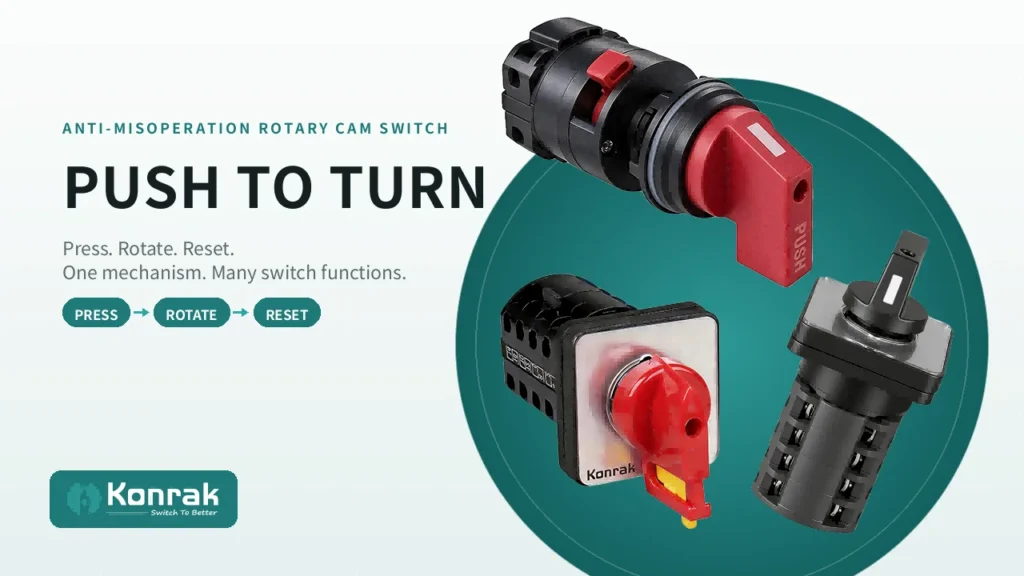
Definition (the answer, up front): A push-to-turn switch — also called a press-to-turn or push-to-operate switch — is a rotary switch that cannot change position unless the operator first presses the knob or lever inward and then rotates it. This deliberate two-step action is what prevents accidental or unintentional operation. Crucially, push-to-turn is an operation […]
Author Archives: davy
Uncategorized
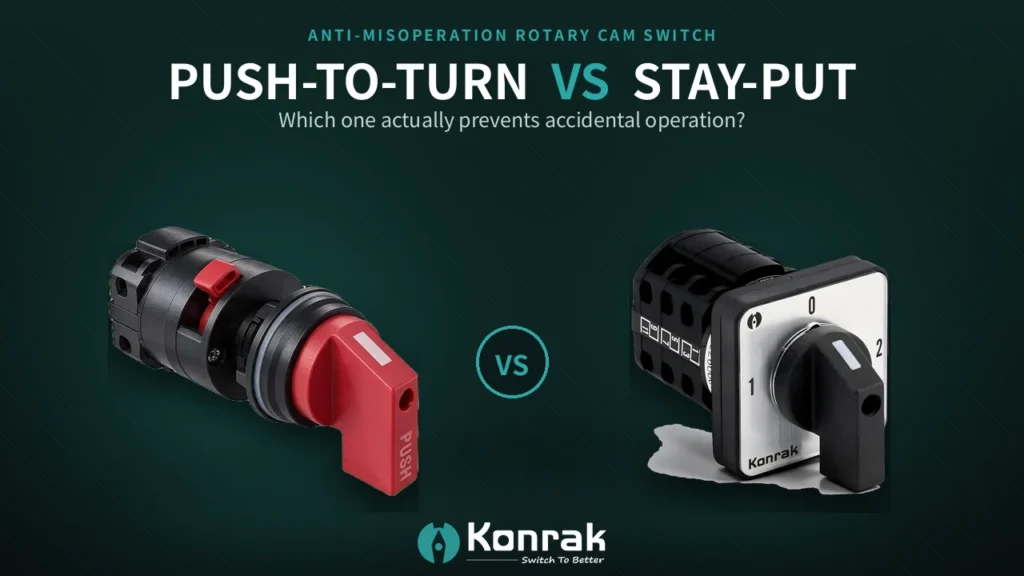
Push to Turn vs Standard Rotary vs Stay-Put Switches: Which One Actually Prevents Accidental Operation?
10
Oct
Oct
Short answer (the conclusion, up front): If preventing accidental operation is the requirement, only one design solves it at the mechanical level — the push-to-turn switch. A standard rotary (stay-put / detent) switch turns at the lightest touch; a momentary push button resets but does not force a deliberate two-step action. A push to turn […]

22
Aug
Aug
Cam switch supplier questions are the cheapest insurance you can buy before an order. Ask these ten questions before ordering — and treat vague answers as a warning sign. (1) What third-party certifications do you hold, and can I see the original reports? (2) Which standard version were they tested to? (3) What is the […]
22
Aug
Aug
Before you place an order, verify cam switch manufacturer claims against six things: an original third-party test report, the exact standard version, the test items covered, a traceable report number, a sample you can test yourself, and a factory you can audit. A datasheet is marketing; a test report is evidence. This guide shows you […]
22
Aug
Aug
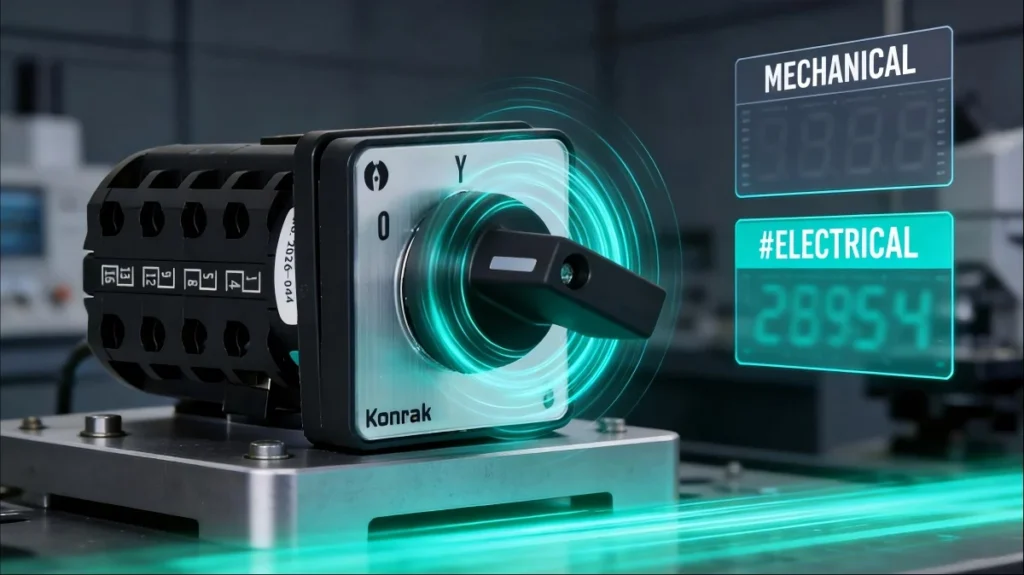
Table of Contents 1. Mechanical Life vs. Electrical Life: Two Different Numbers 2. What Shortens Life in Practice 3. The 1-Million-Operations Design Target 4. Reading a Life Rating on a Datasheet 5. Konrak’s Test Evidence 6. How to Extend Switch Life 7. Summary: The Lifespan Checklist 8. Frequently Asked Questions Mechanical Life vs. Electrical Life: […]
10
Aug
Aug
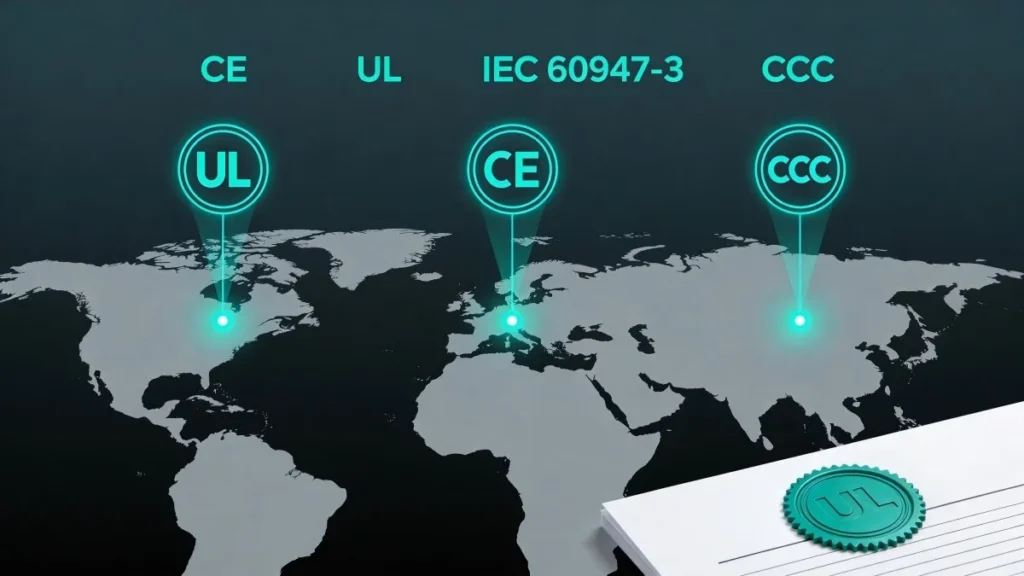
Cam switch certification is not a single stamp — CE, UL, IEC 60947-3, and CCC each serve a different market and a different purpose. In brief: CE (LVD) is required to sell low-voltage equipment in the European Economic Area; IEC 60947-3 is the international product standard for switches, disconnectors, and switch-disconnectors; EN IEC 60947-3 is […]
09
Aug
Aug
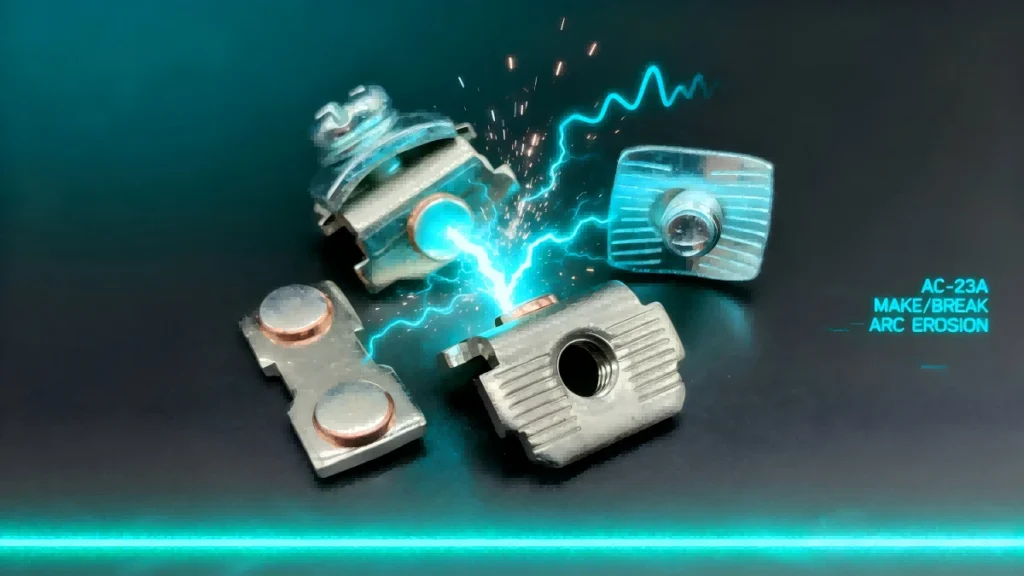
Cam switch contact material is the single biggest determinant of a switch’s temperature rise, contact resistance, and electrical life — and silver alloy is the configuration used in premium switches. Silver-alloy contacts combine low contact resistance with strong resistance to arc erosion, which is exactly what a switch making and breaking current thousands of times […]
09
Aug
Aug
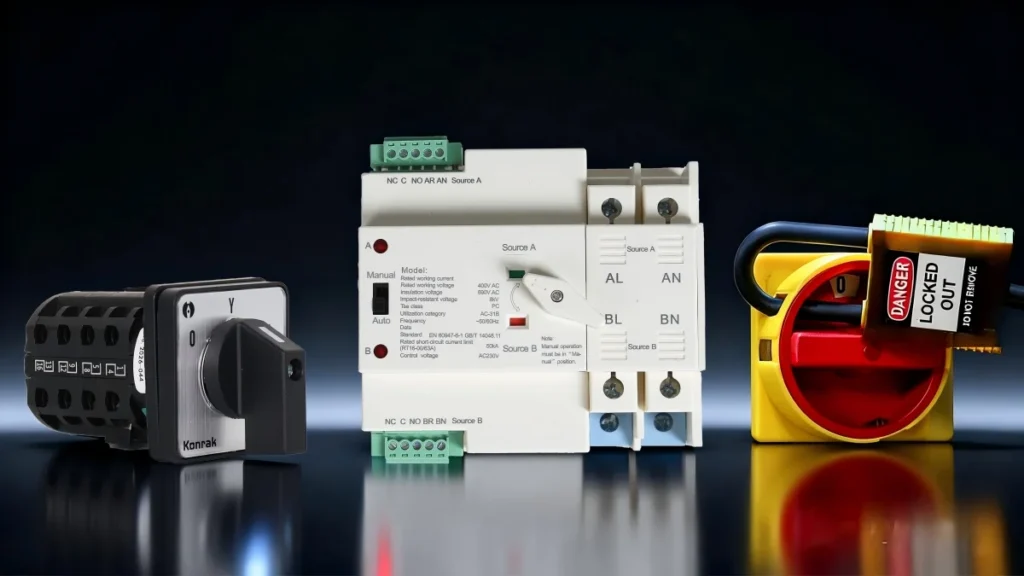
Choosing between a cam switch vs changeover switch vs isolator is simpler than it looks once you know what each device is designed to do. In one sentence: a cam switch is a multi-position control device, a changeover switch transfers a load between two sources, and an isolator safely disconnects a circuit with no load. […]
08
Aug
Aug
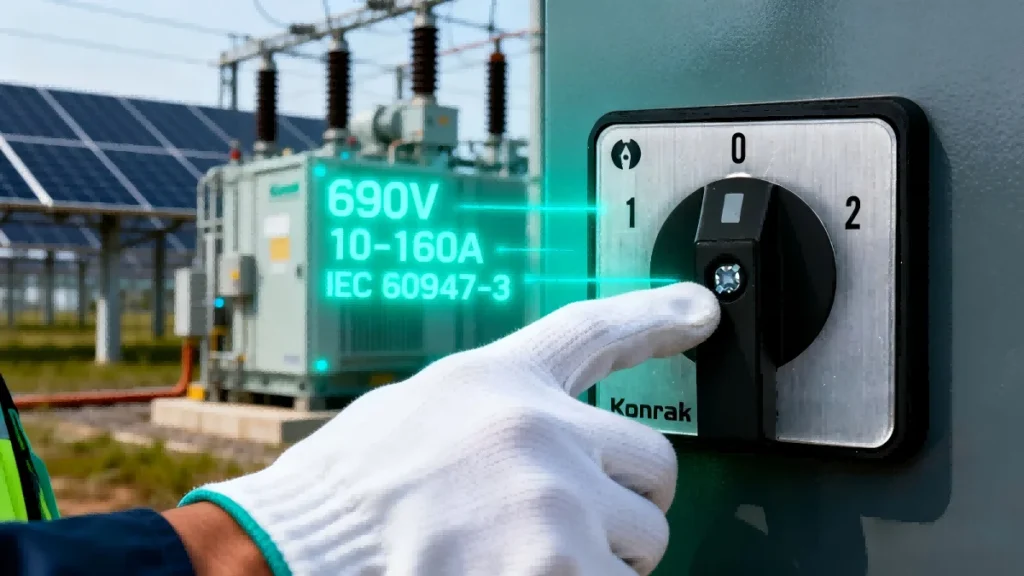
A reliable rotary cam switch selection starts with a proven five-step process: define the application, choose the current and voltage ratings, decide the poles and contact arrangement, match the utilization category, and verify certification. Work through these steps in order, and you will avoid the two most common buying mistakes — oversizing that wastes panel […]
Weatherproof Isolating Switch
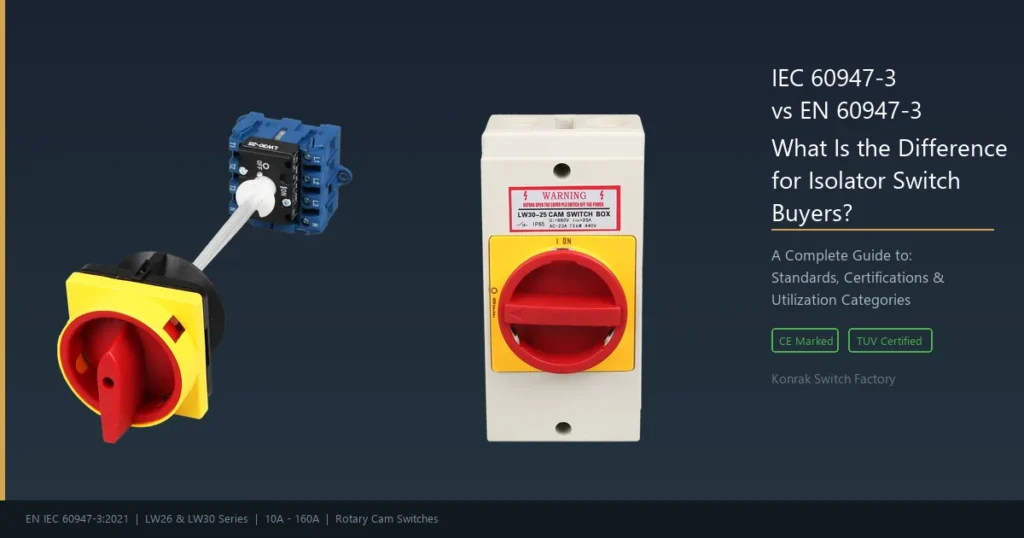
IEC 60947-3 vs EN 60947-3: What Is the Difference for Isolator Switch Buyers?
01
Jun
Jun
If you are sourcing isolator switches, disconnect switches, or switch disconnectors for panel building, OEM equipment, or industrial installations, you have almost certainly encountered two standard numbers: IEC 60947-3 and EN 60947-3. They look similar. They are often used interchangeably on product data sheets. But if you are buying for the European market, or sourcing […]